


























Views
Downloads
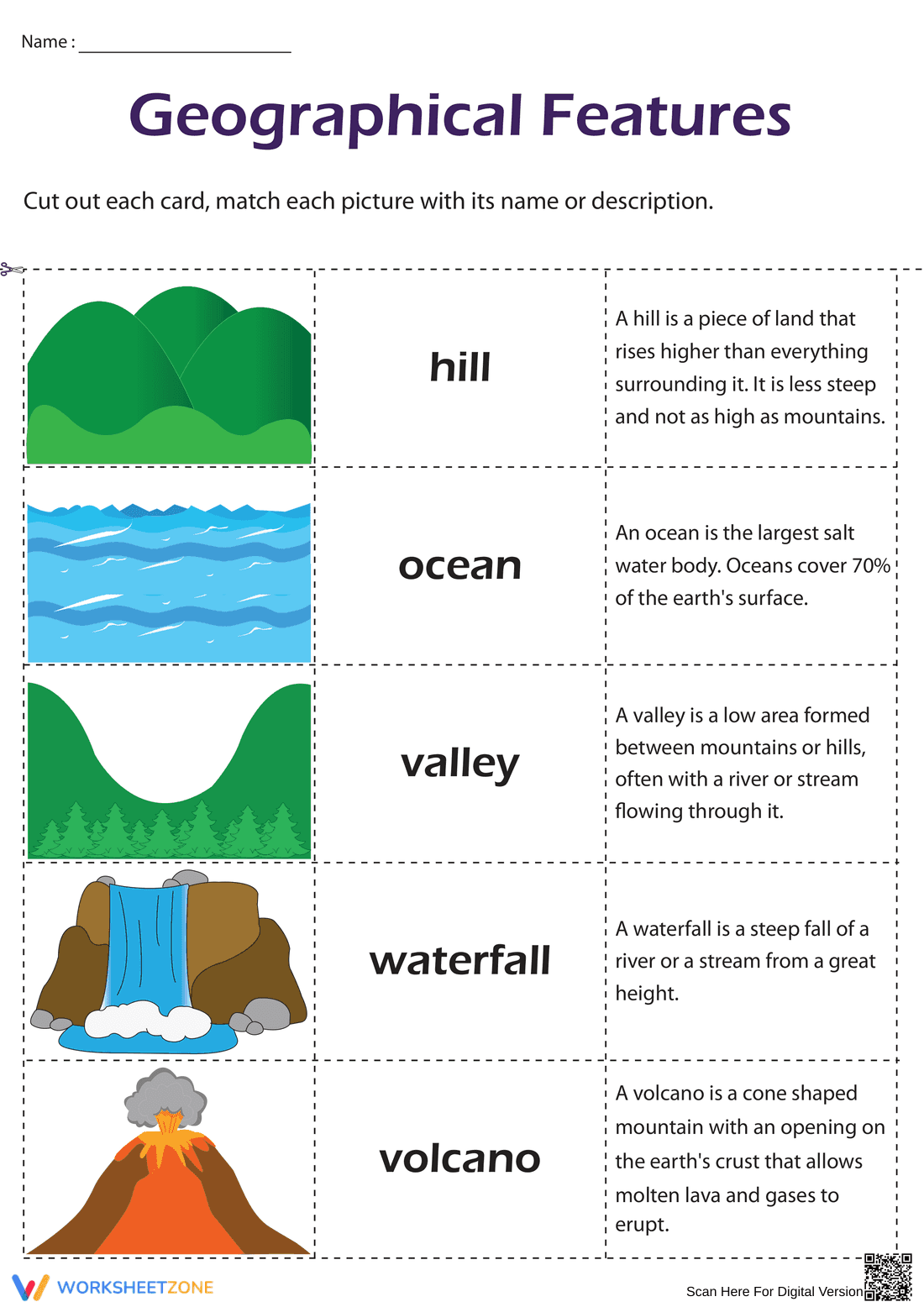
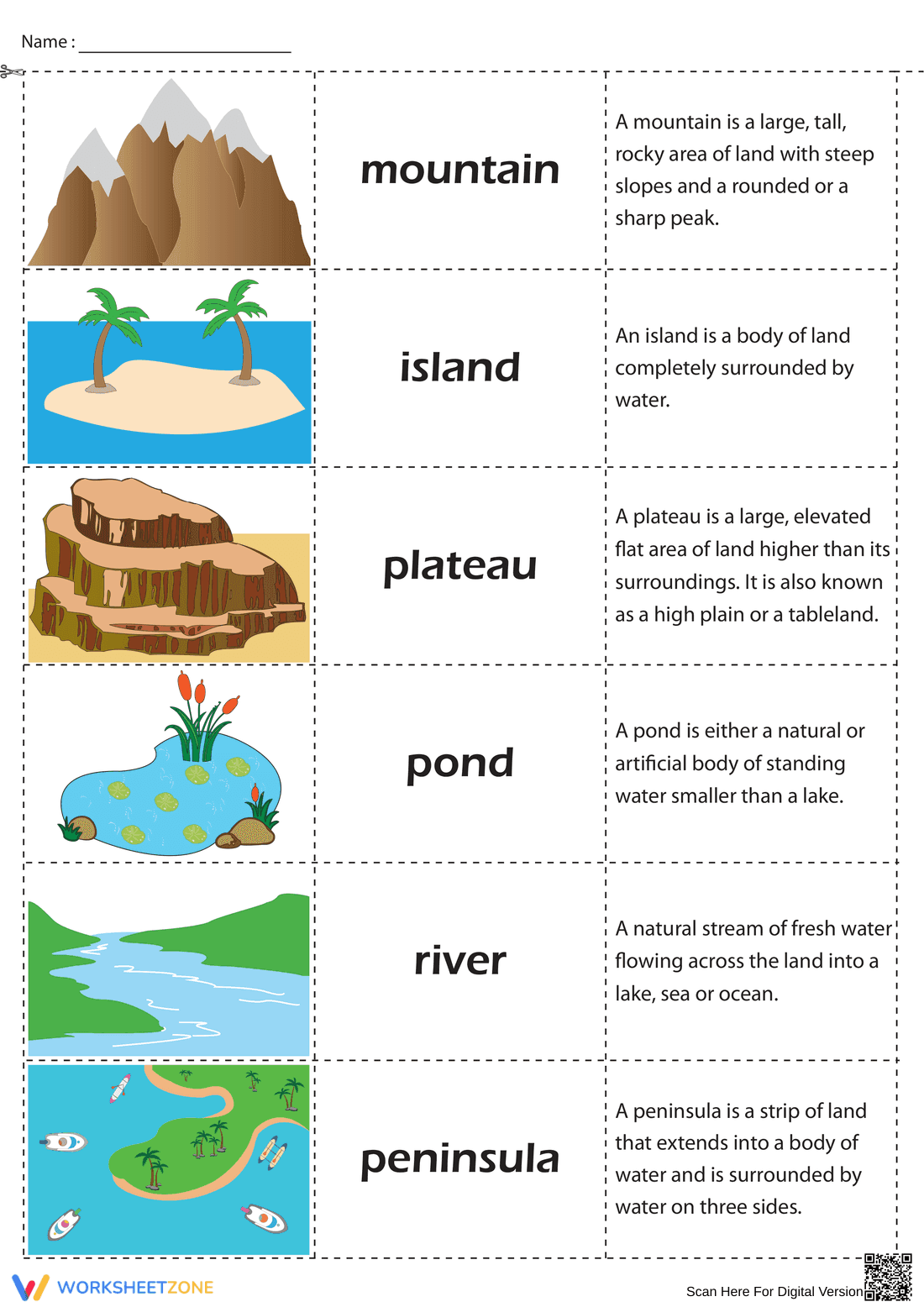
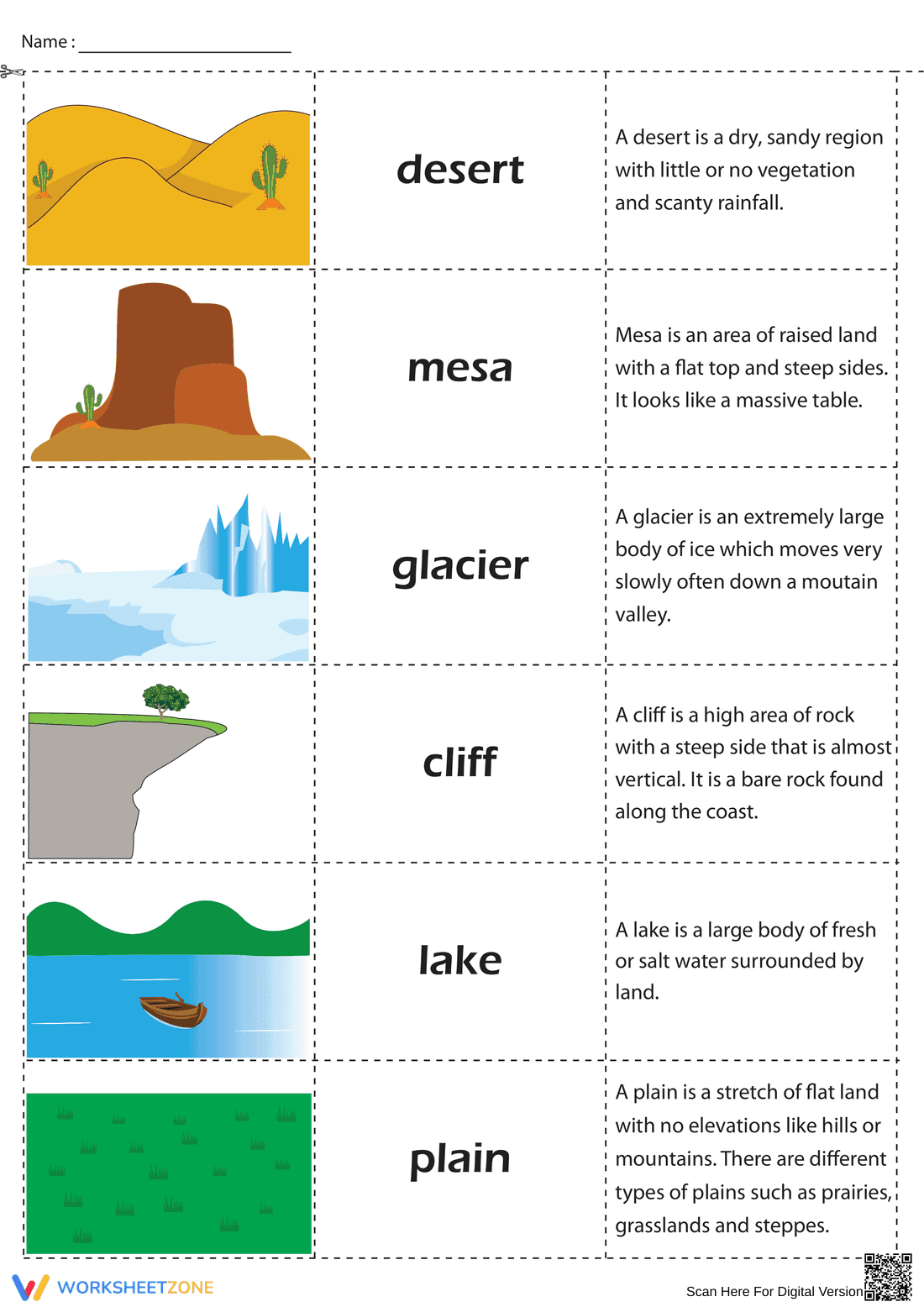
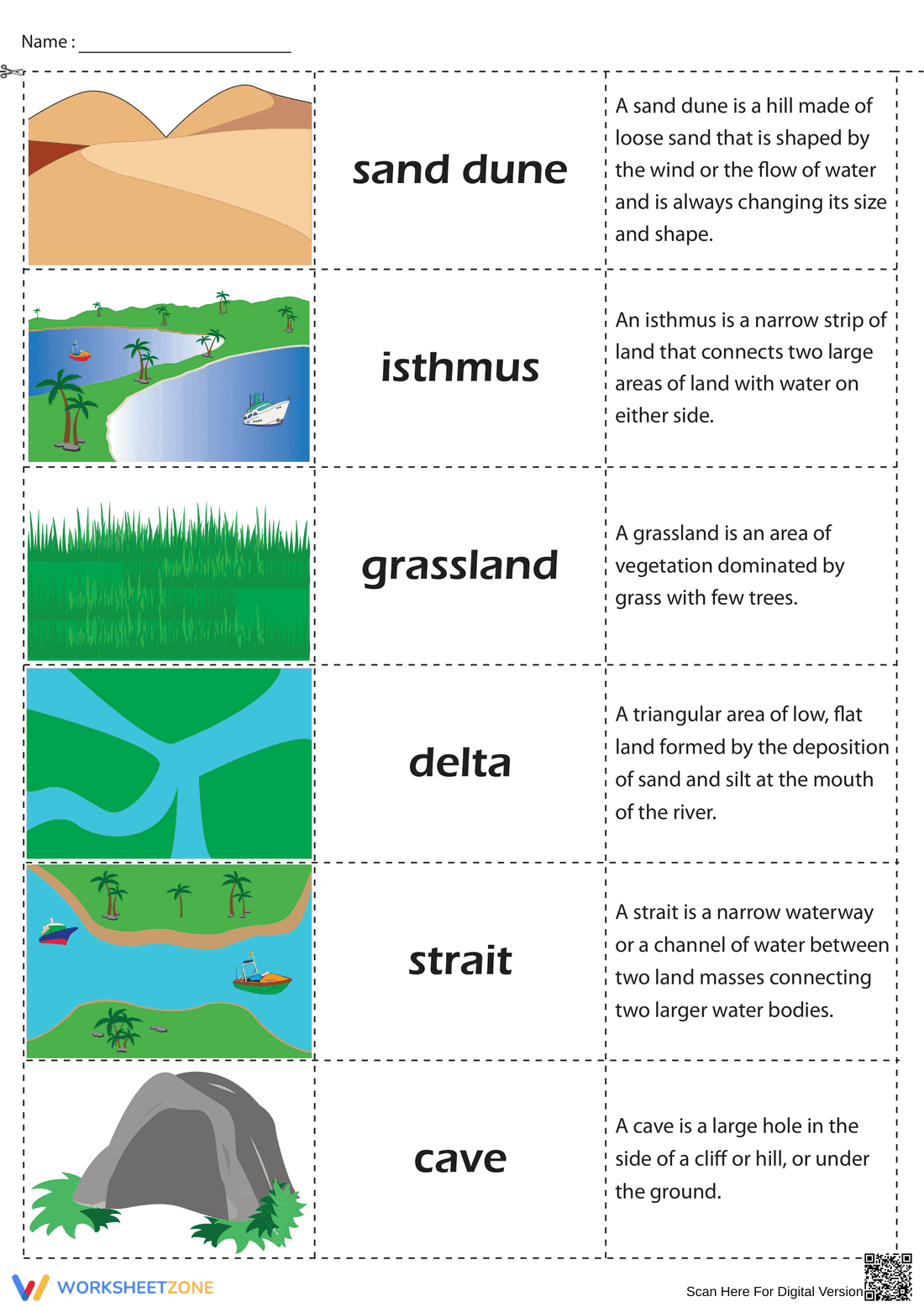
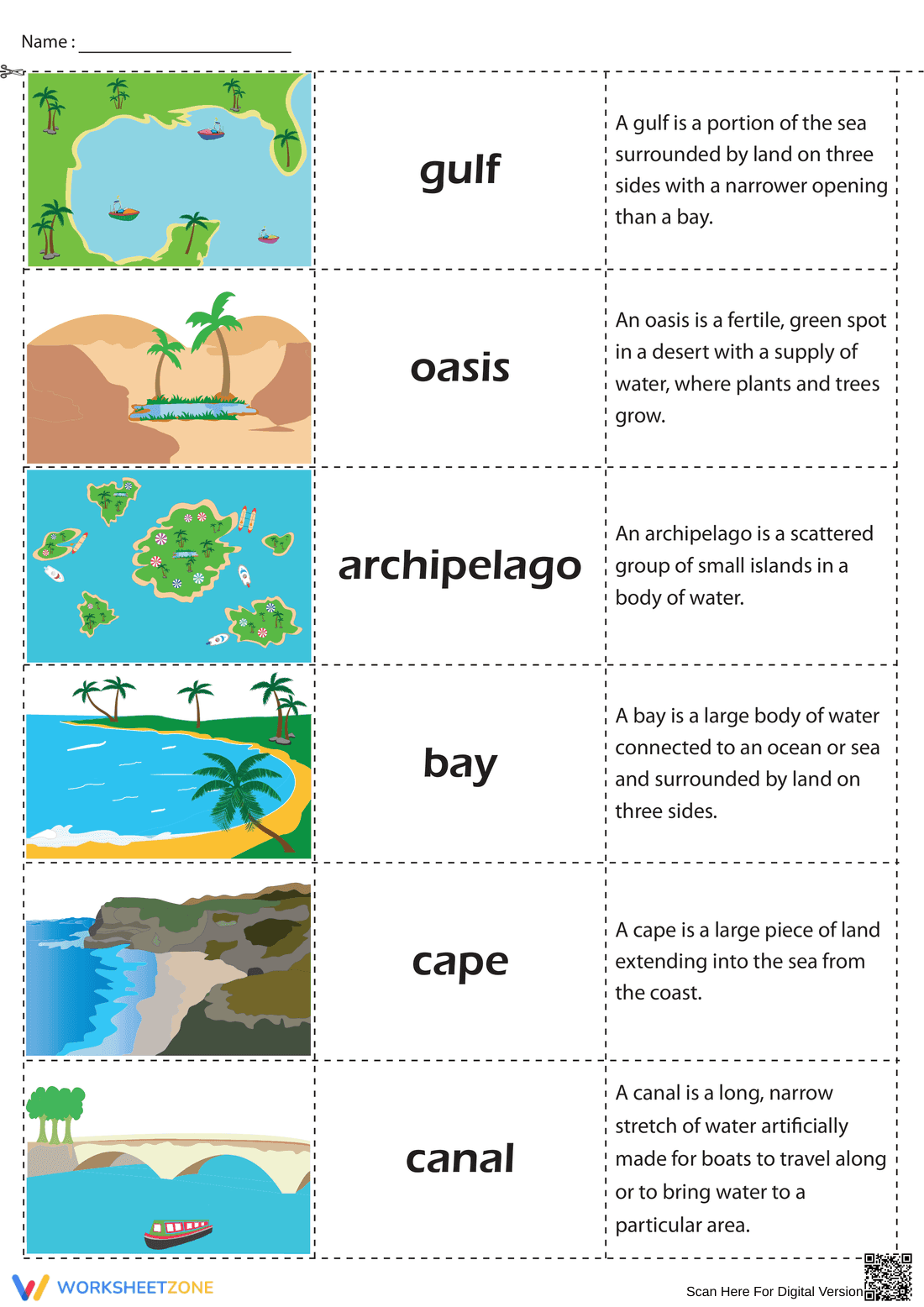

Geographical Features Printable Cards | Grade 2 Science
Paste this activity's link or code into your existing LMS (Google Classroom, Canvas, Teams, Schoology, Moodle, etc.).
Students can open and work on the activity right away, with no student login required.
You'll still be able to track student progress and results from your teacher account.
This printable geographical features activity equips second-grade students to identify and define various landforms and bodies of water. By matching vivid illustrations with their corresponding vocabulary terms and definitions, learners build essential earth science knowledge while developing strong academic vocabulary in a highly engaging format.
At a Glance
- Grade: 2 · Subject: Science
- Standard:
2-ESS2-2— Identify shapes and kinds of land and water- Skill Focus: Identifying geographical features
- Format: 5 pages · 29 problems · PDF
- Best For: Interactive vocabulary practice
- Time: 20–30 minutes
This comprehensive resource includes five pages of cut-out activity cards featuring 29 distinct geographical features. Each set contains a full-color illustration, the vocabulary word, and a clear, student-friendly description. Features range from common landforms like mountains, oceans, and valleys to more specific formations such as isthmuses, archipelagos, and mesas. The uncut pages naturally serve as a reference guide for teachers.
- Guided practice: Introduce the cards whole-class, matching familiar features like hills and lakes to build confidence.
- Supported practice: Students work in small groups to sort and match the remaining cards, using the descriptive text as context clues.
- Independent practice: Learners independently play a memory matching game to solidify their recall of complex terms like delta and strait.
This gradual-release approach ensures students master the vocabulary through repeated, hands-on exposure.
Aligned to primary standard 2-ESS2-2, this activity supports students as they develop models to represent the shapes and kinds of land and bodies of water in an area. By connecting visual representations with descriptive definitions, students build the foundational knowledge required for earth science modeling. Both standard codes can be copied directly into lesson plans, IEP goals, or district curriculum mapping tools.
These activity cards are highly versatile for classroom instruction. Use them during science centers as a collaborative matching game, or distribute them to individual students for interactive notebook sorting activities. As a formative assessment tip, observe students as they match the cards; their ability to pair the text description with the visual model provides immediate insight into their reading comprehension and science vocabulary retention. Expect the full matching activity to take 20 to 30 minutes.
This resource is designed for second-grade general education students, but it is also highly effective for English Language Learners (ELLs) who benefit from the strong visual supports. The clear illustrations make differentiation simple for students needing modified vocabulary practice. Pair these cards with a physical relief map or a direct instruction lesson on earth's surface features to maximize engagement.
Mastering earth science vocabulary requires more than rote memorization; it demands visual and contextual connections. This resource aligns with 2-ESS2-2 to help students identify shapes and kinds of land and water. According to the RAND AIRS 2024 report, integrating visual models with descriptive text significantly improves vocabulary retention in elementary science instruction. When students actively manipulate activity cards, they engage multiple cognitive pathways, reinforcing their understanding of complex geographical features. By transforming abstract concepts like plateaus and peninsulas into tangible, matching tasks, educators can foster deeper comprehension and sustained interest in earth science. This hands-on approach ensures that foundational knowledge is firmly established, preparing young learners for more advanced scientific modeling and geographic studies in later grades.


